
PCC welcomes national roll out of specialist rape and sexual offences courts
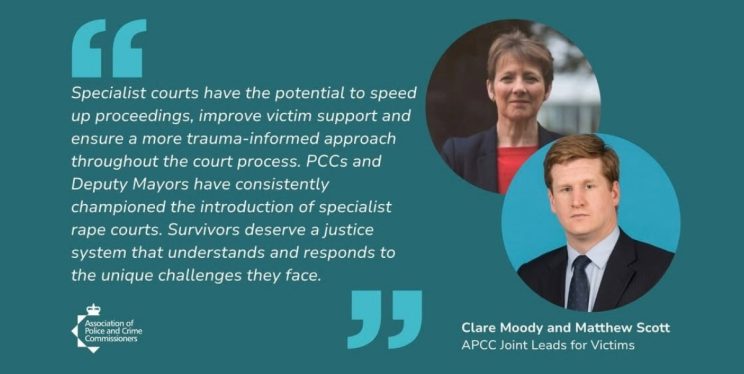
As Joint Lead for Victims, alongside PCC Matthew Scott, I welcome the government’s announcement of a nationwide rollout of specialist rape and sexual offences courts.
For too long, survivors of rape and serious sexual offences have faced unacceptable delays, often waiting months or even years for their cases to be heard.
Justice delayed is justice denied.
Specialist courts have the potential to speed up proceedings, improve victim support and ensure a more trauma-informed approach throughout the court process.
PCCs and Deputy Mayors have consistently championed the introduction of specialist rape courts because survivors deserve a justice system that understands and responds to the unique challenges they face.
No victim should be forced to put their life on hold while waiting for their day in court, nor should they face processes that risk compounding their trauma.
This announcement builds on the progress already being driven through Operation Soteria, which has helped reshape the response to rape and serious sexual offences through a stronger victim-centred approach.
It is encouraging to see the courts system now aligning with these reforms, recognising that improving outcomes for victims requires every part of the justice system to work together.
While this announcement is a welcome and important step, it marks the beginning rather than the end of reform. Court backlogs continue to have a profound impact on victims across the criminal justice system, particularly survivors of violence against women and girls.
Reducing violent crime, with a specific focus on male violence against women and girls, remains a priority in my Police and Crime Plan for Avon and Somerset. This type of violence happens in all sections of society and therefore requires a joined-up response from all parts of society, including the criminal justice system, in order to better serve victims of rape and sexual offences.